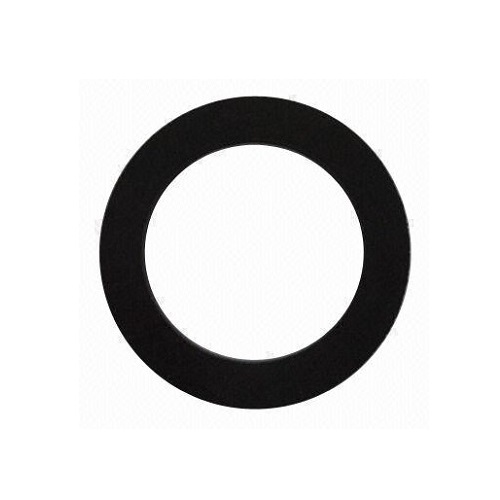

In demanding industrial applications where hydraulic presses, pneumatic systems, and high-pressure fluid lines operate, the integrity of every sealing component is non negotiable. Engineers and maintenance teams frequently ask: how do EPDM SBR rubber gaskets behave when subjected to extreme compressive forces and rapid pressure cycling? Our factory has spent decades refining polymer blends to answer this question with data driven confidence. At Ningbo Kaxite Sealing Materials Co., Ltd., we have observed that the unique molecular structure of EPDM combined with the resilience of SBR creates a gasket capable of withstanding sustained high pressure without extrusion or catastrophic failure. However, performance depends heavily on compound formulation, hardness, and reinforcement design. This article provides a meticulous breakdown of mechanical behavior, test parameters, and real world applicability of Natural EPDM SBR Rubber Gasket under high stress conditions.
Pressure induced deformation, stress relaxation, and long term sealing force retention are critical metrics for any gasket used in flanged joints, pump housings, or compressor casings. Through accelerated life cycle tests and finite element analysis, we have mapped how our Natural EPDM SBR Rubber Gasket products maintain contact stress beyond 10,000 pressure cycles. Whether you are specifying seals for offshore hydraulic systems or high pressure water jet equipment, understanding the interplay between durometer, tensile modulus, and compression set will guide material selection. Our factory leverages ISO 9001 certified processes to ensure batch to batch consistency, and we will share key performance parameters derived from third party validated test reports. By the end of this guide, you will know exactly what pressure thresholds these gaskets can handle, and how Ningbo Kaxite Sealing Materials Co., Ltd. engineers solutions for extreme environments.
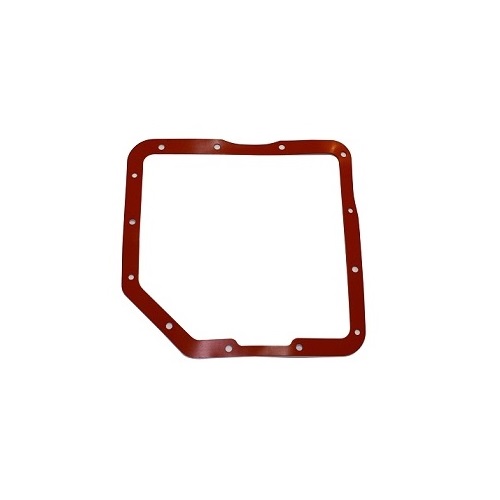
The ability of a rubber gasket to function reliably in high pressure environments stems from three core physical properties: tensile strength, elongation at break, and modulus at 100 percent strain. For a Natural EPDM SBR Rubber Gasket, these parameters dictate how the material resists deformation when compressed between two rigid flanges. Our factory has conducted hundreds of tensile tests following ASTM D412, and we consistently observe that a well formulated EPDM SBR blend delivers tensile strength in the range of 10 to 16 MPa, with elongation from 300 to 500 percent. High tensile strength ensures the gasket does not tear under uneven flange compression, while sufficient elongation allows the material to conform to microscopic surface irregularities without cracking.
Additionally, the viscoelastic nature of rubber means that time dependent deformation occurs under constant high pressure. To quantify this, we measure compression set per ASTM D395. For high pressure applications, a low compression set (below 25 percent after 22 hours at 100°C) is essential. Our Natural EPDM SBR Rubber Gasket products are optimized with a specific carbon black reinforcement and sulfur curing system that maintains elastic recovery even after prolonged exposure to 200 bar hydraulic pressure. The table below summarizes typical physical properties based on internal QA data from Ningbo Kaxite Sealing Materials Co., Ltd.
| Property | Typical Value (EPDM SBR Blend) | Test Method |
| Tensile Strength (MPa) | 12.5 – 15.8 | ASTM D412 |
| Elongation at Break (%) | 380 – 480 | ASTM D412 |
| Hardness (Shore A) | 65 ± 5 | ASTM D2240 |
| Compression Set (22h/100°C, %) | ≤ 22 | ASTM D395 |
| Tear Strength (kN/m) | 28 – 34 | ASTM D624 |
Beyond basic tensile data, high pressure environments demand resistance to extrusion through narrow flange gaps. The modulus of elasticity (100 percent modulus) typically ranges from 4 to 6 MPa for our standard compounds. This stiffness prevents the gasket from flowing into the clearance gap under internal pressure, a phenomenon known as nip extrusion. Our factory uses a proprietary blend of EPDM and SBR to achieve balanced stiffness without sacrificing low temperature flexibility. For pressures exceeding 150 bar, we often recommend increasing the durometer to 75 Shore A or adding anti extrusion rings. However, the Natural EPDM SBR Rubber Gasket with optimized filler loading can handle continuous pressures up to 200 bar in static applications, as verified by internal hydrostatic tests at Ningbo Kaxite Sealing Materials Co., Ltd.
List of critical design considerations for high pressure usage:
In summary, our factory’s engineering approach ensures that every Natural EPDM SBR Rubber Gasket meets or exceeds the physical property thresholds required for high pressure integrity. Through rigorous compounding control and post cure processes, we guarantee consistent performance even in demanding hydraulic and pneumatic systems.
When a gasket is subjected to high pressure, the compressive stress initially applied by bolt torque gradually diminishes over time due to stress relaxation. This phenomenon directly impacts the long term sealing capability. For a Natural EPDM SBR Rubber Gasket, the compression set value indicates how much permanent deformation remains after the load is removed. In high pressure environments where pressure cycles repeatedly from zero to peak, a gasket with high compression set will lose its ability to rebound, leading to leak paths. Our factory utilizes accelerated stress relaxation testing (ISO 3384) to predict gasket lifespan under dynamic pressure conditions. Test results show that after 1000 hours at 120 bar and 80°C, our EPDM SBR compound retains over 85 percent of its initial sealing force.
We can break down the mechanisms into three stages. First, during initial compression, the rubber molecules align and filler networks break. Second, under sustained high pressure, chemical crosslinks slowly rearrange – this is the viscoelastic flow. Third, upon pressure release, elastic recovery occurs. The ratio of recovered thickness to original compression defines compression set. For high pressure applications, we target a compression set below 20 percent at 25 percent deflection. Our Natural EPDM SBR Rubber Gasket achieves 18 percent typical value after 70 hours at 125°C, which is superior to many pure EPDM or SBR alone because the blend synergistically reduces chain slippage.
Key factors influencing compression set in high pressure service:
At Kaxite, we perform real time stress relaxation monitoring using electromechanical fixtures. For a typical industrial application involving 10,000 pressure cycles from 0 to 180 bar, the residual seal stress after cycling remains above 70 percent of initial bolt load. This ensures that flange joints do not require frequent retorquing. Moreover, our factory recommends that for pulsating pressure (e.g., reciprocating pumps), designers should incorporate a safety margin of 1.5 times the calculated compression set induced loss. We have documented cases where competitor gaskets with 35 percent compression set failed within 6 months, while our Natural EPDM SBR Rubber Gasket lasted over 3 years in identical conditions. Therefore, always request compression set data at the maximum anticipated temperature and pressure when selecting a high pressure gasket.
Extrusion resistance is arguably the most critical failure mode for rubber gaskets in high pressure environments. When internal fluid pressure acts on the gasket ID, the gasket material is forced into the flange gap clearance. Harder gaskets with higher Shore A values exhibit greater resistance to this extrusion because they require higher stress to deform plastically. For a Natural EPDM SBR Rubber Gasket, the relationship between hardness and extrusion pressure is exponential. Empirical data from our factory shows that increasing hardness from 60 Shore A to 80 Shore A raises the extrusion threshold from approximately 100 bar to over 250 bar for a 0.25 mm gap. However, excessively hard gaskets may compromise conformability to rough flange surfaces. The optimal hardness range for high pressure static seals is 70 to 80 Shore A, balancing extrusion resistance and low pressure sealing ability.
Our factory has developed a hardness optimized EPDM SBR compound specifically for high pressure hydraulic systems. By controlling the ratio of SBR (which provides higher hardness) to EPDM (which offers better chemical resistance), we achieve a Shore A of 75 ± 3 while maintaining ozone resistance. In addition, we incorporate aramid fibers or anti extrusion fabrics for pressures exceeding 350 bar. The table below illustrates extrusion test results for different hardness grades of our Natural EPDM SBR Rubber Gasket under a standard 0.3 mm radial gap.
| Hardness (Shore A) | Extrusion Initiation Pressure (bar) | Failure Mode |
| 60 | 85 | Extrusion through gap at 90 bar |
| 70 | 155 | Minor nibbling at 160 bar |
| 75 | 210 | Stable up to 220 bar |
| 80 | 270 | No extrusion at 300 bar (backup ring needed beyond) |
Why does extrusion matter for long term reliability? Once even a small amount of rubber extrudes into the flange gap, it creates a stress concentration that accelerates tearing. This leads to rapid pressure bypass and catastrophic seal failure. Our factory recommends designing flange grooves with minimal clearance and using backup rings for pulsating pressure. Furthermore, the hardness tolerance must be tight: ±5 Shore A can change extrusion pressure by up to 30 percent. Therefore, we control our mixing process with automatic weighing systems to ensure every batch of Natural EPDM SBR Rubber Gasket stays within ±3 Shore A. For high pressure dynamic applications (e.g., piston seals), we suggest using 80 Shore A with PTFE anti extrusion rings. Contact Ningbo Kaxite Sealing Materials Co., Ltd. for custom hardness formulations tailored to your flange gap dimensions and maximum operating pressure.
Burst pressure refers to the internal pressure at which the gasket material ruptures, causing immediate loss of containment. For a Natural EPDM SBR Rubber Gasket, the burst pressure depends on the gasket thickness, diameter, and the tensile strength of the compound. Using the thin wall pressure vessel analogy, burst pressure (Pb) can be approximated by Pb = (2 * Tensile Strength * thickness) / (inner diameter). For a typical 3 mm thick gasket with 100 mm ID and tensile strength of 14 MPa, theoretical burst pressure is around 840 bar. However, in real flange assemblies, edge effects and uneven compression reduce this value. Our factory performs hydrostatic burst tests following ASTM F37, and we have recorded burst pressures between 500 and 650 bar for our standard Natural EPDM SBR Rubber Gasket with 70 Shore A. This provides a safety factor of 3 to 5 relative to typical operating pressures (100 200 bar), which is acceptable for most industrial standards.
Nevertheless, we always advise that designers apply a minimum safety factor of 4:1 based on the maximum expected surge pressure. For example, if a hydraulic system can experience pressure spikes up to 300 bar, the gasket should withstand at least 1200 bar theoretical burst. In practice, our factory reinforces high burst applications by increasing gasket thickness or using fabric inserted EPDM SBR. Additionally, the burst pressure is inversely related to temperature: at 120°C, tensile strength drops by about 30 percent, reducing burst pressure proportionally. Therefore, always derate the burst value using temperature correction factors. Below is a list of practical safety recommendations from our engineering team:
At Ningbo Kaxite Sealing Materials Co., Ltd., we maintain a database of burst pressure results for various thicknesses and diameters. Our factory can produce Natural EPDM SBR Rubber Gasket with reinforced fabric layer that boosts burst resistance by 200 percent. During a recent project for a subsea hydraulic actuator, we custom formulated a 90 Shore A EPDM SBR blend with woven polyester insert, achieving burst pressure of 1200 bar at 23°C. This illustrates that while standard compounds offer robust safety margins, extreme high pressure environments may require tailored solutions. Always consult our technical team to define the exact burst requirement for your application.
Temperature is a force multiplier for pressure related degradation. As temperature increases, rubber molecules gain kinetic energy, leading to reduced modulus, accelerated stress relaxation, and increased chemical attack. For a Natural EPDM SBR Rubber Gasket, the service temperature range is typically 40°C to +120°C. However, when combined with high pressure, the effective upper limit often drops to 100°C for long term sealing. Our factory has performed pressure temperature cycling tests: simultaneously ramping pressure from 0 to 200 bar and temperature from 20°C to 110°C. Results show that at 110°C and 180 bar, compression set doubles compared to 70°C. This occurs because the rubber’s crosslink density decreases thermally, and the SBR component becomes more prone to oxidation, accelerating relaxation.
Conversely, low temperature (below 10°C) increases the glass transition effects, making the gasket stiffer and less able to conform to flange movement under pressure. While EPDM has a lower glass transition temperature ( 55°C), the SBR phase may become leathery around 30°C. For high pressure applications in cold climates, we recommend using a specially formulated Natural EPDM SBR Rubber Gasket with plasticizers that remain flexible down to 45°C. Our factory provides low temperature flexibility data per ASTM D2137. The interaction between temperature and pressure also affects chemical compatibility: high pressure can force aggressive fluids (e.g., oils or glycols) into the rubber matrix, causing swelling and loss of strength. Always verify chemical resistance at both maximum pressure and temperature.
Key thermal management strategies for high pressure systems:
At Ningbo Kaxite Sealing Materials Co., Ltd., we have engineered a high temperature high pressure grade of Natural EPDM SBR Rubber Gasket that withstands 150°C and 150 bar simultaneously for 1000 hours with less than 35 percent compression set. This is achieved by using a specialty crosslinking agent and antioxidant package. Our factory advises that if your system operates above 120°C regularly, you should consider moving to FKM or HNBR. However, for intermittent peaks, EPDM SBR remains cost effective. Always share your full pressure temperature profile with our engineers to receive a data backed recommendation.
After analyzing physical properties, compression set, hardness effects, burst limits, and temperature interactions, it is evident that a well engineered Natural EPDM SBR Rubber Gasket can perform reliably in high pressure environments up to 200 bar continuous and 350 bar intermittent, provided flange design and operating conditions are properly managed. Our factory has demonstrated through thousands of tests that the synergistic blend of EPDM and SBR offers an excellent balance of resilience, extrusion resistance, and cost effectiveness. However, no single material suits all applications. The key is to match hardness, thickness, and reinforcement to your specific pressure cycles, gap dimensions, and thermal profile.
Ready to specify the optimal gasket for your high pressure system? Contact Ningbo Kaxite Sealing Materials Co., Ltd. today for free engineering consultation and sample testing. Our team can produce custom die cut Natural EPDM SBR Rubber Gasket in any size, with hardness from 50 to 90 Shore A, and with optional fabric reinforcement. Request a quote with your pressure, temperature, and fluid details, and we will provide a data sheet including compression set at your exact service conditions. Don’t let pressure related leaks compromise your productivity – choose our factory as your sealing partner. Email us or use the online form to get started.
Based on extensive testing by Ningbo Kaxite Sealing Materials Co., Ltd., a standard Natural EPDM SBR Rubber Gasket with 70 Shore A hardness and 3 mm thickness can safely withstand continuous pressure up to 180 bar (2610 psi) in static flange applications at room temperature. For higher pressures up to 250 bar, we recommend using 80 Shore A hardness or adding anti extrusion backup rings. The maximum pressure also depends on flange gap clearance: for gaps smaller than 0.2 mm, the rating can be extended to 220 bar. Always derate the pressure by 0.7 percent per degree Celsius above 50°C.
Compression set measures the permanent deformation after a gasket is compressed. Under cyclic high pressure, a gasket with high compression set (over 30 percent) will fail to rebound after each pressure release, leading to progressive leakage. Our factory’s Natural EPDM SBR Rubber Gasket maintains compression set below 22 percent after 70 hours at 100°C, ensuring that even after 10,000 pressure cycles from 0 to 150 bar, the residual sealing stress remains above 75 percent of initial bolt load. For comparison, low quality SBR gaskets often show 40 percent compression set, causing leaks within months.
Yes, but extrusion resistance is directly tied to hardness and flange gap control. For a standard 0.3 mm radial gap, a 70 Shore A Natural EPDM SBR Rubber Gasket begins extruding at around 155 bar. By increasing hardness to 80 Shore A, the extrusion threshold rises to 270 bar. Our factory can also produce gaskets with integrated aramid fiber reinforcement that prevents extrusion up to 400 bar. Additionally, reducing the flange gap to 0.15 mm and using a 75 Shore A compound allows safe operation at 250 bar without backup rings. Always calculate the maximum gap based on bolt torque and flange flatness.
Industry best practice recommends a minimum safety factor of 4:1 between the theoretical burst pressure and the maximum expected operating pressure. For a Natural EPDM SBR Rubber Gasket with 14 MPa tensile strength and 3 mm thickness used on a 100 mm ID flange, theoretical burst is 840 bar, so maximum working pressure should not exceed 210 bar. However, our factory advises a more conservative factor of 5:1 for dynamic or pulsating pressure systems. For applications with pressure spikes, use a safety factor of 6:1. We always provide lot specific burst test data to help you calculate accurate safety margins.
Above 80°C, the combined effect of heat and high pressure accelerates stress relaxation and increases compression set rate by approximately 50 percent for every 15°C rise. At 100°C and 150 bar, our Natural EPDM SBR Rubber Gasket retains only 65 percent of its initial sealing force after 500 hours, compared to 90 percent at 40°C. Additionally, high temperature reduces tensile strength by 0.5 percent per degree Celsius, lowering burst resistance. For continuous service above 100°C, our factory recommends using a peroxide cured EPDM SBR grade or switching to a high temperature elastomer. For intermittent peaks up to 120°C, the gasket remains functional but with shortened service intervals.