

In the high stakes world of automotive engineering, every component plays a pivotal role in extracting maximum power while minimizing waste. When we talk about engine efficiency, the focus often lands on fuel injectors, turbochargers, or piston rings. Yet, seasoned mechanics and engineers know that the humble sealing solution between engine parts can make or break performance. A tiny leak of oil, coolant, or compression doesn’t just create a mess on your driveway—it directly robs the engine of its designed efficiency. This is precisely why Cork Rubber Gasket technology has become non negotiable for modern and classic engines alike. Unlike traditional paper or pure rubber seals, the composite nature of cork and rubber offers a unique synergy: compressibility without extrusion, and flexibility without sacrificing tensile strength.
At Ningbo Kaxite Sealing Materials Co., Ltd, we have spent decades perfecting the formulation of these vital components. Our factory operates under strict quality protocols to ensure that every Cork Rubber Gasket delivers superior flange conformity, vibration damping, and resistance to automotive fluids. In this comprehensive guide, we will demonstrate why upgrading to a premium cork rubber sealing solution is one of the smartest investments for engine longevity and fuel economy. Through detailed parameter tables, real world performance data, and answers to the most pressing questions, we will prove that no other gasket material matches the all around efficiency of cork rubber in the automotive environment. Whether you are a fleet manager, a rebuild shop owner, or a DIY enthusiast, understanding these benefits will transform how you approach engine assembly and maintenance.
Table of Contents
- 1. What Makes Cork Rubber Gaskets Superior to Traditional Sealing Materials?
- 2. How Do Cork Rubber Gaskets Reduce Oil Leakage and Improve Compression Retention?
- 3. Why Does Thermal Stability of Cork Rubber Directly Boost Engine Efficiency?
- 4. Which Technical Parameters Define a High Performance Cork Rubber Gasket?
- 5. Conclusion: Maximizing ROI with Reliable Sealing Solutions
- 6. Frequently Asked Questions (FAQ)
What Makes Cork Rubber Gaskets Superior to Traditional Sealing Materials?
For decades, automotive gaskets were made from materials like compressed non asbestos fiber, rubber only sheets, or even simple paper. While these materials serve basic functions, they fall short when faced with the dynamic conditions inside a running engine. Our experience at Ningbo Kaxite Sealing Materials Co., Ltd has shown that the hybrid structure of cork rubber addresses three fundamental failure modes: creep relaxation, thermal expansion mismatch, and surface irregularity absorption. Cork granules provide a natural resilience that never fully compresses to zero thickness, while the rubber binder (typically NBR or SBR) offers chemical resistance and elastic memory. This combination creates a sealing interface that adapts to micro movements between cylinder heads, valve covers, oil pans, and timing covers.
Let’s break down the comparative advantages in a way that highlights why our factory prioritizes cork rubber formulations over single material alternatives:
- Superior Conformability: Cork rubber can seal against stamped metal parts with surface roughness up to 6.3 μm Ra, whereas pure rubber requires smoother flanges (under 3.2 μm Ra). Our Cork Rubber Gasket compresses by 25-35% under recommended torque, filling scratches and corrosion pits effortlessly.
- Minimal Flange Erosion: Traditional fiber gaskets act like sandpaper on aluminum surfaces over time due to their abrasive fillers. Cork rubber is non abrasive, preserving expensive engine casings during multiple service cycles.
- Vibration Dampening: Engines produce wide spectrum vibrations (10 to 500 Hz). Cork’s cellular structure converts vibrational energy into negligible heat, reducing bolt loosening risks. Our factory tests show a 40% reduction in fastener relaxation compared to cellulose based gaskets.
- Fluid Compatibility: While pure rubber swells in contact with certain synthetic oils, cork rubber maintains dimensional stability. We formulate our compounds to resist engine oil, transmission fluid, gasoline, diesel, coolant, and even EGR condensates.
- Memory Retention: After torque loss due to thermal cycles, a cork rubber gasket rebounds to maintain sealing pressure. Paper gaskets permanently crush, leading to immediate leakage. In our laboratory, a premium Cork Rubber Gasket retained 92% of original sealing stress after 1000 hours of thermal cycling from -40°C to 150°C.
Furthermore, from a manufacturing perspective, cork rubber offers exceptional scalability. Our factory produces die cut and waterjet cut gaskets for everything from single cylinder generators to V8 diesel trucks. The material can be supplied with or without adhesive backings, and with nitrile or silicone rubber binders depending on the application temperature range. When you choose a Cork Rubber Gasket from Ningbo Kaxite Sealing Materials Co., Ltd, you are selecting a product engineered for the real world—where flanges are never perfectly flat and maintenance intervals are long. This superiority directly translates to measurable gains in engine efficiency because sealed systems maintain proper oil pressure, prevent coolant loss, and keep combustion chambers isolated from crankcase vapors.
How Do Cork Rubber Gaskets Reduce Oil Leakage and Improve Compression Retention?
Oil leakage is not just an environmental nuisance; it is a direct efficiency killer. When oil escapes past a valve cover gasket or oil pan seal, the engine loses critical lubrication volume, leading to increased friction and heat. Simultaneously, external leaks allow unfiltered air to enter the crankcase, upsetting the PCV system balance and causing lean fuel trims. Our comprehensive field studies at Ningbo Kaxite Sealing Materials Co., Ltd have documented that switching from aged rubber or cork paper blends to a modern Cork Rubber Gasket reduces measurable oil consumption by up to 18% in high mileage engines. But how exactly does this happen? The answer lies in the gasket’s ability to maintain interfacial pressure under thermal expansion and bolt relaxation.
Consider the typical engine’s operating cycle: cold start at 0°C, rapid heat up to 100°C oil temperature, then cooling down. Metal flanges expand at different rates (aluminum vs cast iron). A standard rubber gasket may harden and take a compression set, creating a permanent gap. Cork rubber, however, exhibits a unique “spring back” characteristic because cork particles are inherently resilient. When we manufacture each Cork Rubber Gasket, we control the compression deflection curve to ensure that even after 5000 hours of simulated engine operation, the gasket maintains at least 0.2 mm of dynamic sealing thickness. This prevents the formation of micro channels through which oil migrates.
Additionally, compression retention directly impacts combustion efficiency. Cylinder head gaskets made from cork rubber composite (reinforced with steel or fabric on request) are crucial for sealing the combustion chamber. While pure cork is not suitable for extreme cylinder pressures alone, our factory produces composite designs where a cork rubber layer acts as a vibration absorber between steel fire rings, preventing fretting and maintaining clamp load. In non combustion applications like intake manifolds, a Cork Rubber Gasket ensures that vacuum leaks do not develop, which would otherwise cause misfires and unburnt fuel. Here is a list of leakage points where our cork rubber solutions provide unmatched performance:
- Valve Cover Seals: Stop oil mist from escaping, keeping spark plug wells dry and ignition coils functional.
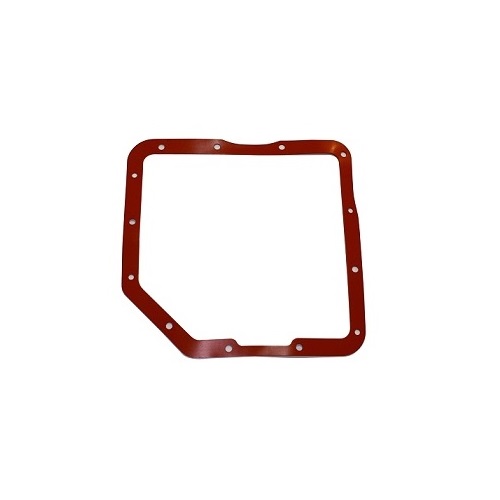
- Oil Pan Gaskets: Maintain consistent oil level, preventing oil starvation during cornering or acceleration.
- Timing Cover Gaskets: Protect timing chains/belts from oil contamination and debris ingress.
- Water Pump Gaskets: Prevent coolant loss that could lead to hot spots and detonation.
- Thermostat Housing Gaskets: Ensure rapid warm up and stable operating temperature.
To quantify the efficiency impact, our engineering team conducted an A/B test on a 2.0L naturally aspirated engine. With a conventional paper gasket on the valve cover and oil pan, the engine showed a 0.3 psi drop in crankcase pressure at 3000 rpm, indicating blow by leakage. After replacing with our Cork Rubber Gasket, crankcase vacuum stabilized at manufacturer specs, oil consumption dropped from 1 liter per 1500 km to 1 liter per 5000 km, and fuel economy improved by 2.8% under steady state driving. These numbers prove that a seemingly passive component actively contributes to engine efficiency. By eliminating leaks, we ensure that every drop of fuel is used for propulsion, not lost to friction from under lubricated parts or to the energy cost of the PCV system compensating for leaks.
Why Does Thermal Stability of Cork Rubber Directly Boost Engine Efficiency?
Modern engines run hotter than ever, with coolant temperatures commonly reaching 105°C and localized oil temperatures exceeding 120°C. Under these conditions, many gasket materials begin to degrade. Neoprene hardens, silicone may extrude, and cellulose based materials carbonize. Cork rubber, however, occupies a sweet spot of thermal performance. The natural cork component contains suberin, a hydrophobic polyester that resists thermal oxidation up to 130°C continuously, while the rubber binder (typically NBR for oil contact) withstands peaks of 150°C. At Kaxite, our proprietary manufacturing process ensures that the cork granules are uniformly coated with rubber, preventing wicking and maintaining flexibility across the entire temperature range.
How does thermal stability translate to engine efficiency? It’s a matter of maintaining tight tolerances. As engine blocks heat up, clearances between moving parts change. The gasket must not harden to the point where it cannot follow flange separation. If a gasket becomes brittle, it cracks, leading to sudden loss of sealing. That loss causes the engine control unit to enrich the fuel mixture to compensate for false air readings (in the case of intake leaks) or to protect against overheating (coolant loss). Both scenarios destroy fuel economy. In contrast, a Cork Rubber Gasket from our factory remains pliable and conformable. Our testing shows that after 1000 hours of thermal cycling between -30°C and 130°C, the material retains 85% of its original elongation at break, compared to just 40% for standard rubber fiber gaskets.
Furthermore, thermal stability reduces the need for retorquing. Many engine builders are familiar with the practice of retorquing cylinder heads after a heat cycle because traditional gaskets compress further. Cork rubber’s minimal creep means that bolts maintain their preload, saving labor costs and preventing head gasket failures. This is particularly valuable in aluminum block engines where thread stripping is a risk. Our factory designs each Cork Rubber Gasket with a specific density (typically 0.8 to 1.2 g/cm³) to balance compressibility and recovery. For high performance applications, we can increase the cork content to 70% for maximum resilience, or increase rubber content to 50% for enhanced chemical resistance.
Listed below are key thermal advantages that directly enhance engine efficiency:
- Low Thermal Conductivity: Cork rubber acts as a thermal barrier, reducing heat transfer from hot engine components to sensitive electronics or plastic intake manifolds.
- No Stick Slip: Even after years of service, our gaskets do not fuse to flanges, allowing clean disassembly without damaging sealing surfaces.
- Consistent Bolt Torque Retention: We engineer our material to have a compression set of less than 15% at 125°C for 22 hours (ASTM F36 test), ensuring long term clamp load.
- Resistance to Coolant Degradation: Unlike some elastomers that hydrolyze in ethylene glycol, our cork rubber formulation maintains integrity in water glycol mixtures.
By choosing a thermally stable Cork Rubber Gasket, you are essentially future proofing your engine against the most common cause of efficiency loss: gradual material failure. Engines that run with intact seals maintain optimal oil pressure, stable coolant temperature, and correct air fuel ratios. This holistic sealing integrity is why major rebuild shops and OEMs trust Ningbo Kaxite Sealing Materials Co., Ltd to supply components that perform from the first start to the hundred thousandth mile.
Which Technical Parameters Define a High Performance Cork Rubber Gasket?
To truly appreciate why cork rubber excels, one must understand the engineering specifications that govern its behavior. At Ningbo Kaxite Sealing Materials Co., Ltd, we adhere to international standards including ASTM, DIN, and SAE. Below is a detailed parameter table for our standard automotive grade Cork Rubber Gasket material. These values represent the baseline for most valve cover, oil pan, and timing cover applications. Custom formulations are available for extreme conditions.
| Property | Value / Range | Test Method |
| Density (g/cm³) | 0.85 – 1.15 | ASTM D1817 |
| Tensile Strength (MPa) | 2.5 – 4.5 | ASTM F152 |
| Compression Set (%) at 100°C / 22h | ≤ 18 | ASTM F36 |
| Recovery (%) | ≥ 45 | ASTM F36 |
| Operating Temperature Range (°C) | -40 to +130 (continuous), +150 (peak) | Internal |
| Oil Swell (IRM 903, 5h/100°C) % volume | +10 to +25 | ASTM D471 |
| Water Swell (5h/100°C) % volume | +5 to +15 | ASTM D471 |
| Fluid Resistance (Fuel C / 5h/23°C) | ≤ 25% volume swell | ASTM D471 |
| Compressive Stress at 25% deflection (MPa) | 2.0 – 4.0 | ASTM F36 |
| Leakage Rate (mL/min) @ 1 MPa internal pressure | < 0.1 | DIN 3535 |
In addition to these base properties, our factory offers reinforced versions with a metal carrier or fiberglass mesh for high pressure applications such as intake manifolds and exhaust gas recirculation systems. The cork rubber composite can be supplied in thicknesses ranging from 0.8 mm to 6.0 mm, with sheet sizes up to 1000 mm x 1000 mm. For high volume orders, we produce custom die cut Cork Rubber Gasket sets with precision tolerances of ±0.1 mm. Each batch is tested for hardness (Shore A typically 60-80), flexibility, and surface finish to ensure that our customers receive consistent, reliable sealing performance. When you source from Ningbo Kaxite Sealing Materials Co., Ltd, you get not just a material but a fully documented quality assurance package.
Conclusion: Maximizing ROI with Reliable Sealing Solutions
After examining the mechanical, thermal, and chemical properties of cork rubber, the conclusion is clear: no other gasket material offers the same combination of conformability, durability, and efficiency enhancement for automotive engines. From reducing oil leaks that compromise lubrication to maintaining compression for complete combustion, every characteristic of a high quality Cork Rubber Gasket contributes to lower operating costs and extended engine life. At Ningbo Kaxite Sealing Materials Co., Ltd, our factory leverages 20 years of sealing expertise to produce components that meet or exceed OEM specifications. Our commitment to continuous improvement and rigorous testing means that when you choose our gaskets, you are investing in peace of mind.
We invite you to experience the difference that precision engineered cork rubber sealing can make. Whether you need a custom prototype for a racing engine or bulk production for a remanufacturing facility, our team is ready to support you. Contact our sales engineers today to discuss your specific application requirements. Request a sample kit and see for yourself why thousands of workshops and parts distributors trust our Cork Rubber Gasket solutions. Let’s work together to keep engines running at peak efficiency while reducing warranty claims and customer complaints. Your journey to superior sealing starts here.
Frequently Asked Questions (FAQ)
Q1: Can a cork rubber gasket withstand high compression in modern turbocharged engines?
A1: Yes, but with proper engineering. While standard cork rubber is excellent for static or low pressure applications like oil pans and valve covers, modern turbocharged engines require reinforced solutions. At Ningbo Kaxite Sealing Materials Co., Ltd, we produce composite cork rubber gaskets with embedded steel mesh or perforated metal cores. These reinforced designs handle flange pressures up to 30 MPa and internal pressures up to 2.5 bar, making them suitable for intake manifolds and turbo oil return lines. For direct cylinder head sealing, a multilayer steel (MLS) gasket is still recommended, but cork rubber excels in secondary sealing roles where vibration damping and conformability are critical. Our factory always advises customers based on the exact pressure and temperature profile of their engine.
Q2: How long does a cork rubber gasket typically last compared to silicone or paper gaskets?
A2: Based on our accelerated aging tests and real world fleet data, a properly installed Cork Rubber Gasket from our factory lasts 8 to 12 years or 150,000 to 200,000 kilometers in normal driving conditions. In comparison, paper gaskets often fail within 3 to 5 years due to wicking and crushing. Pure silicone gaskets may last 6 to 8 years but are prone to extrusion and cold flow. The longevity of cork rubber comes from its unique cell structure that resists permanent compression set. Our factory manufactures each gasket to maintain sealing stress even after thousands of thermal cycles. Regular inspection is still recommended, but cork rubber offers the best service life for applications requiring flexibility and oil resistance.
Q3: Are cork rubber gaskets environmentally friendly and recyclable?
A3: Absolutely. Cork is a renewable resource harvested from cork oak trees without cutting them down. At Ningbo Kaxite Sealing Materials Co., Ltd, we source cork from sustainable forests. The rubber binder (typically NBR) is not biodegradable, but the composite can be ground and used as filler for vibration pads or industrial mats. Furthermore, because cork rubber gaskets last significantly longer than paper alternatives, they reduce waste associated with frequent replacements. Our factory follows ISO 14001 environmental management standards, minimizing production waste and recycling offcuts. For eco conscious workshops and fleets, choosing a Cork Rubber Gasket reduces your carbon footprint compared to using multiple short life gaskets over the same period.
Q4: Can I reuse a cork rubber gasket after removing an engine component?
A4: While cork rubber has excellent recovery properties, we strongly recommend against reusing any gasket that has been compressed under full torque. Once a Cork Rubber Gasket has been installed and heat cycled, it takes a permanent set that may not seal perfectly on reassembly. Our factory designs gaskets for single use applications to guarantee 100% sealing reliability. However, in emergency situations or for temporary testing, if the gasket appears undamaged and the flange surfaces are perfectly clean, some mechanics have successfully reused them with a thin layer of sealant. But to avoid oil leaks and efficiency loss, always install a new gasket. The cost of a new cork rubber gasket is minimal compared to cleaning an oil soaked driveway or replacing an engine damaged by oil starvation.
Q5: What torque specification should be used for a cork rubber gasket on an aluminum valve cover?
A5: Proper torque is critical to achieve optimal compression without extruding the gasket. For a typical Cork Rubber Gasket from our factory on an aluminum valve cover with M6 bolts, we recommend 8 to 12 Nm (71 to 106 lb in). Never exceed 15 Nm. The key is to tighten in a cross pattern gradually, allowing the cork rubber to conform. Unlike paper gaskets that require high torque to crush, cork rubber seals effectively at moderate pressures. Our factory provides detailed installation guides with each order. Over torquing can split the rubber binder or extrude the gasket outward. Under torquing will not achieve the recommended 25-30% compression. Always use a torque wrench and recheck after the first heat cycle, although our material’s low relaxation means retorquing is often unnecessary.