
In oil and gas pipeline engineering, sealing performance is not a secondary consideration but a core safety requirement. Any sealing failure may result in product leakage, pressure loss, environmental damage, or costly shutdowns. For this reason, pipeline designers and operators consistently select sealing components that demonstrate proven reliability under extreme operating conditions.
Rubber Steel Gaskets are widely applied in oil and gas pipelines because they combine elastic sealing behavior with mechanical reinforcement. This dual performance characteristic allows them to maintain stable sealing even under high pressure, temperature fluctuation, and continuous vibration. Based on our long term manufacturing and application experience at Ningbo Kaxite Sealing Materials Co., Ltd., this gasket type has become a preferred solution for critical pipeline joints worldwide.
From our factory production data and field feedback, Rubber Steel Gaskets are especially valued in applications where conventional rubber or metal gaskets struggle to deliver consistent performance. The following sections explain the technical and practical reasons behind their widespread use.
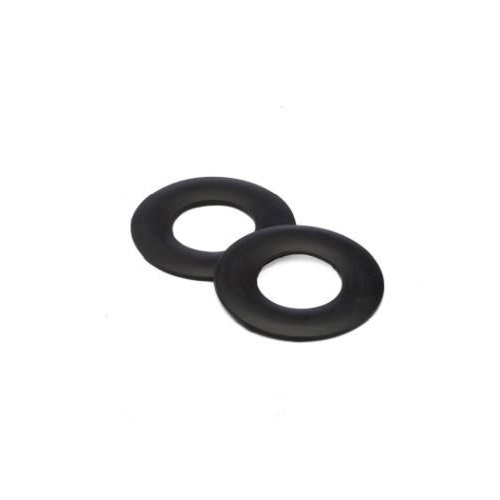
Rubber Steel Gaskets are composite sealing components engineered to meet the demanding requirements of oil and gas pipeline systems. Unlike single material gaskets, they integrate rubber sealing layers with internal steel reinforcement, enabling them to maintain both flexibility and structural strength throughout long term service. At Ningbo Kaxite Sealing Materials Co., Ltd., our design approach focuses on balancing elastic recovery with dimensional stability. This balance is essential in pipeline environments where pressure cycles, vibration, and temperature variation are unavoidable.
This composite structure allows Rubber Steel Gaskets to perform reliably in both static and dynamic sealing conditions. Our factory experience confirms that structural integrity directly affects sealing longevity.
Understanding product parameters is essential for selecting suitable Rubber Steel Gaskets for oil and gas pipelines. Below is a representative parameter overview based on our standard production range.
| Rubber Material | NBR EPDM FKM Custom Compounds |
| Steel Core Material | Carbon Steel Stainless Steel Customized Grades |
| Temperature Range | -30°C to 200°C Depending on Rubber Type |
| Pressure Rating | Up to 40 MPa Based on Design |
| Hardness Range | 60 to 85 Shore A |
| Thickness Tolerance | ±0.1 mm |
Our production control ensures that each parameter is maintained within strict tolerances. This consistency is one of the reasons Rubber Steel Gaskets from Ningbo Kaxite Sealing Materials Co., Ltd. are trusted in demanding pipeline projects.
From our experience, manufacturing precision directly impacts sealing reliability. Even minor deviations in thickness or hardness can shorten service life under pipeline operating conditions.
Oil and gas pipelines are some of the most critical infrastructure in the energy sector. These pipelines transport highly flammable and pressurized fluids across long distances, often through challenging terrains and varying environmental conditions. In such demanding circumstances, sealing solutions cannot be generic; they must be specifically engineered to handle the unique operational stresses encountered in pipeline systems. Our experience at Ningbo Kaxite Sealing Materials Co., Ltd. has shown that choosing the right gasket, particularly Rubber Steel Gaskets, is essential for ensuring operational safety, reducing maintenance frequency, and minimizing the risk of environmental hazards.
The operational challenges faced by oil and gas pipelines are multi-faceted. Unlike typical industrial piping, pipelines deal with extreme internal pressures, temperature fluctuations, chemical exposure, and mechanical stresses. Each of these factors has a direct impact on the performance of the sealing components installed at flange connections, valves, and other critical joints.
One of the primary challenges in oil and gas pipelines is maintaining a reliable seal under high internal pressures. Transmission pipelines can operate at pressures exceeding 40 MPa, and even small deviations in flange compression can lead to leakage. Traditional rubber gaskets may extrude under such high pressure, leading to reduced sealing efficiency or even catastrophic failure. Rubber Steel Gaskets address this issue by combining a steel reinforcement core with flexible rubber layers. The steel core provides the necessary structural integrity to resist extrusion while the rubber layer ensures a tight seal against flange irregularities. From our factory perspective, this combination ensures that Rubber Steel Gaskets consistently maintain high-pressure sealing performance across various pipeline installations.
Oil and gas pipelines often carry chemically aggressive media, including crude oil, natural gas, refined petroleum products, and various chemical additives. Exposure to these substances can degrade ordinary sealing materials, causing swelling, hardening, or cracking. This degradation compromises the seal and can result in leakage, environmental contamination, and costly shutdowns. At Ningbo Kaxite Sealing Materials Co., Ltd., our Rubber Steel Gaskets are manufactured using high-quality elastomers that are specifically selected for chemical compatibility. NBR, FKM, and EPDM compounds can be tailored to resist specific hydrocarbons and additives, ensuring long-term performance even in the harshest chemical environments.
Pipeline operations are frequently exposed to extreme temperature variations. Surface pipelines may be subjected to freezing winter conditions, while buried pipelines or offshore installations encounter temperature fluctuations caused by transported fluids or environmental factors. These thermal cycles can cause flange expansion and contraction, potentially loosening conventional gaskets and reducing sealing efficiency. Rubber Steel Gaskets effectively absorb these thermal expansions while maintaining consistent contact pressure. The rubber layers remain elastic over a wide temperature range, and the steel reinforcement prevents permanent deformation. Our factory has consistently observed that properly designed Rubber Steel Gaskets maintain sealing integrity over thousands of thermal cycles, minimizing the risk of temperature-induced leakage.
Another critical factor is mechanical stress and vibration. Pump stations, compressors, and flow turbulence generate continuous vibration and fluctuating loads at pipeline joints. Ordinary gaskets can experience micro-movements that compromise their sealing surfaces, leading to leaks or premature failure. Rubber Steel Gaskets are designed to dampen vibrations and distribute mechanical stress evenly across the flange. The steel core resists flange warping while the rubber layers conform to surface irregularities, creating a resilient seal that tolerates dynamic movement. At Ningbo Kaxite Sealing Materials Co., Ltd., our quality control ensures that each Rubber Steel Gasket maintains uniform hardness and thickness, which is critical to withstanding mechanical stresses over long-term operation.
In addition to operational challenges, oil and gas pipelines face strict environmental and safety regulations. Any leakage can result in environmental contamination, operational hazards, and significant financial penalties. This regulatory landscape demands that sealing solutions not only meet mechanical and chemical requirements but also demonstrate reliability over the pipeline’s service life. Our Rubber Steel Gaskets comply with industry standards, offering certified performance metrics that give pipeline operators confidence in safety and compliance. From our perspective, these gaskets play a critical role in preventing incidents that could affect both human safety and environmental protection.
Frequent maintenance or gasket replacement is both costly and operationally disruptive. Selecting specialized sealing solutions like Rubber Steel Gaskets reduces the need for frequent interventions. Their durability and reliability extend the service life of pipeline joints, allowing operators to focus on other maintenance priorities. From our factory experience, pipelines equipped with Rubber Steel Gaskets consistently show reduced downtime and maintenance costs, highlighting the long-term economic benefits of specialized sealing solutions.
The ultimate measure of a gasket's suitability in oil and gas pipelines is its performance under extreme conditions. Pipelines are often subjected to high internal pressures, fluctuating temperatures, corrosive chemical media, and mechanical stresses such as vibration and flange misalignment. Rubber Steel Gaskets are specifically engineered to address these challenges, offering both elastic sealing and mechanical reinforcement. At Ningbo Kaxite Sealing Materials Co., Ltd., we have consistently observed that these gaskets maintain their sealing integrity and reliability, even in the most demanding pipeline environments.
Oil and gas pipelines frequently operate under pressures that can exceed 40 MPa. In such scenarios, conventional rubber gaskets may extrude or deform, leading to leakage. Rubber Steel Gaskets overcome this challenge with their steel reinforcement cores. The steel layer provides structural stability, preventing excessive deformation while ensuring the rubber layers maintain full contact with flange surfaces. From our factory testing, gaskets designed with optimized rubber hardness and steel thickness demonstrate minimal compression set, even after repeated high-pressure cycles. This makes them particularly effective in transmission pipelines, high-pressure flow lines, and valve connections where reliability is critical.
Pipeline systems are exposed to temperature extremes ranging from sub-zero conditions in northern climates to elevated temperatures caused by hot fluid transport or environmental factors. Rubber Steel Gaskets excel in these conditions due to their composite structure. The rubber layers remain flexible across a wide temperature range, ensuring that sealing contact pressure is preserved. Meanwhile, the steel reinforcement prevents permanent distortion or buckling, which could otherwise compromise sealing performance. Our experience at Ningbo Kaxite Sealing Materials Co., Ltd. confirms that Rubber Steel Gaskets maintain consistent sealing performance even after thousands of thermal cycles, reducing the likelihood of temperature-induced leaks.
Pipelines often carry chemically aggressive media, including crude oil, natural gas, and chemical additives. Exposure to these substances can degrade standard rubber gaskets, leading to swelling, hardening, or cracking over time. Rubber Steel Gaskets mitigate this issue through careful material selection. At our factory, we use high-quality elastomers such as NBR, FKM, and EPDM, chosen for their compatibility with specific hydrocarbons and chemicals. The bonded interface between rubber and steel ensures that chemical exposure does not lead to delamination or failure. This combination of material resilience and mechanical reinforcement allows Rubber Steel Gaskets to maintain a reliable seal even in aggressive chemical environments.
Mechanical stress and vibration are common in oil and gas pipelines, particularly near pump stations, compressors, and high-flow sections. Flange joints can experience micro-movements that reduce gasket contact and create potential leak paths. Rubber Steel Gaskets are designed to absorb and distribute these mechanical stresses effectively. The steel core provides rigidity, reducing flange deflection, while the rubber layers conform to surface irregularities, maintaining a continuous seal. In our field tests and factory trials at Ningbo Kaxite Sealing Materials Co., Ltd., these gaskets demonstrate exceptional vibration damping, which significantly prolongs service life and reduces maintenance requirements.
The long-term durability of Rubber Steel Gaskets makes them particularly valuable for critical pipeline infrastructure. By combining elastic recovery with structural reinforcement, these gaskets minimize leakage risks over extended operational periods. This durability reduces the frequency of maintenance interventions, downtime, and associated operational costs. Our factory data show that properly manufactured Rubber Steel Gaskets can remain fully functional for many years, even under cyclic pressure and temperature variations, vibration, and chemical exposure. This reliability is a key reason why pipeline operators increasingly prefer Rubber Steel Gaskets for long-term projects.
In real-world installations, flange surfaces may not always be perfectly aligned, and minor imperfections are common. Rubber Steel Gaskets excel under these circumstances. The elastic rubber layers adapt to surface irregularities, while the steel reinforcement ensures that compression remains uniform across the flange face. This combination prevents leak paths that would otherwise develop with standard gaskets. At Ningbo Kaxite Sealing Materials Co., Ltd., we design Rubber Steel Gaskets with precise thickness tolerances and optimized hardness to ensure maximum conformity and sealing reliability in challenging installation conditions.
In conclusion, Rubber Steel Gaskets are an essential sealing solution for oil and gas pipeline applications due to their unique combination of elasticity and mechanical reinforcement. They provide reliable performance under high pressure, temperature fluctuations, chemical exposure, mechanical stress, and flange misalignment. By maintaining sealing integrity over long operational periods, these gaskets reduce maintenance frequency, prevent leaks, and enhance overall pipeline safety.
At Ningbo Kaxite Sealing Materials Co., Ltd., our commitment is to deliver high-quality Rubber Steel Gaskets that meet the rigorous demands of the energy sector. Through precise material selection, optimized manufacturing processes, and strict quality control, our gaskets offer durability, resilience, and consistent performance. Choosing our Rubber Steel Gaskets ensures that your pipeline systems operate efficiently, safely, and cost-effectively over their entire service life.
If you are looking for reliable sealing solutions for your oil and gas projects, contact our team at Ningbo Kaxite Sealing Materials Co., Ltd. today to discuss your specific requirements and benefit from our expertise in high-performance Rubber Steel Gaskets.
Q1: Why are Rubber Steel Gaskets preferred over pure rubber gaskets in pipelines?
They offer higher pressure resistance, improved dimensional stability, and longer service life under pipeline conditions.
Q2: How do Rubber Steel Gaskets handle temperature fluctuations?
The rubber layer maintains elasticity while the steel core limits deformation, allowing stable sealing across temperature changes.
Q3: Are Rubber Steel Gaskets suitable for corrosive media?
Yes, material selection can be customized to ensure chemical compatibility with oil and gas media.
Q4: Do Rubber Steel Gaskets reduce maintenance frequency?
Their stable sealing performance minimizes leakage and reduces the need for frequent gasket replacement.
Q5: How should Rubber Steel Gaskets be selected for a pipeline project?
Selection should consider pressure rating, temperature range, chemical compatibility, and flange design.